Lista completa de MPP en orquídeas

En esta sección se hace una recopilación de los estudios de dinámica poblacional en orquídeas que han usado matrices de transición de estados y de edades. Se identifican algunos de los temas principales de los trabajos.

En la siguiente tabla se presentan los estudios de dinámica poblacional en orquídeas que usaron MPP y las preguntas principales que los autores intentaron responder. En la gran mayoría de los trabajos se evalúan múltiples hipótesis/ideas sobre la dinámica poblacional de las orquídeas. Para información específica sobre la metodología usada en cada estudio, se recomienda revisar los trabajos originales.

  • Clave de las variables:

    • Riesgo: Si se evaluó el riesgo de extinción de la especie.
    • Variación espacial: Si se evaluó la variación espacial de la especie.
    • Variación temporal: Si se evaluó la variación temporal de la especie.
    • Latencia: Si se evaluó la importancia de la latencia (dormancy) de la especie.
    • Métodos de estimación de parámetros: Si se evaluaron métodos alternos de estimación de parámetros (no tradicionales).
    • Historia de vida: Si se evaluó la historia de vida de la especie en un contexto evolutivo.
    • Otro: Si se evaluó otra pregunta no incluida en las anteriores.
    • Referencia: Referencia del estudio.
Código
library(readr)
library(tidyverse)
library(dplyr)
library(gt)

Género Especies Riesgo Var. esp. Var. temp. Latencia Est. param. Hist. vida Otro Referencia
Aspasia principissa Si - Si - - - - Zotz & Schmidt (2006)
Brassavola cucullata Si Si Si - - - IPM, Transient Dynamics, Transfer Function Ackerman et al. (2020)
Broughtonia cubensis Si Si Si - - - Transient Dynamics Raventós et al. (2021)
Caladenia amoena Si - - Si Si Si Selección de modelos, método para estimar latencia Tremblay et al. (2009a) Tremblay et al. (2009b);
Caladenia argocalla Si - - Si Si Si Selección de modelos, método para estimar latencia Tremblay et al. (2009a) Tremblay et al. (2009b)
Caladenia clavigera Si - - Si Si Si Selección de modelos, método para estimar latencia Tremblay et al. (2009a) Tremblay et al. (2009b)
Caladenia elegans Si - - Si Si Si Selección de modelos, método para estimar latencia Tremblay et al. (2009a) Tremblay et al. (2009b)
Caladenia graniticola Si - - Si Si Si Selección de modelos, método para estimar latencia Tremblay et al. (2009a) Tremblay et al. (2009b)
Caladenia macroclavia Si - - Si Si Si Selección de modelos, método para estimar latencia Tremblay et al. (2009a) Tremblay et al. (2009b)
Caladenia oenochila Si - - Si Si Si Selección de modelos, método para estimar latencia Tremblay et al. (2009a) Tremblay et al. (2009b)
Caladenia rosella Si - - Si Si Si Selección de modelos, método para estimar latencia Tremblay et al. (2009a) Tremblay et al. (2009b)
Caladenia valida Si - - Si Si Si Selección de modelos, método para estimar latencia Tremblay et al. (2009a) Tremblay et al. (2009b)
Caladenia orientalis Si Si Si Si - - Interacciones abióticas Coates & Duncan (2009)
Cephalanthera longifolia - - - Si Si Si Interacciones abióticas y bióticas Shefferson et al. (2012)
Cleistes divaricata var. divaricata Si Si Si Si Si - - Gregg (1991)
Cleistes divaricata var. bifaria Si Si Si Si Si - - Gregg (1991)
Cleistes bifaria - Si - Si - - Estructura de tamaño y estado Gregg & Kéry (2006)
Corallorhiza trifida Si - Si Si - - - Iriondo Alegria et al. (2009)
Crepidium acuminatum Si - Si - - - Efecto de cosecha Timsina et al. (2021)
Cypripedium acaule - - - - Si - Edad de individuos reproductivos Cochran & Ellner (1992)
Cypripedium calceolus Si Si Si Si - - Selección de modelos Nicolè, Brzosko & Till-Bottraud (2005)
Cypripedium calceolus Si Si Si Si - - Efecto de aislamiento Garcı́a, Goni & Guzmán (2010)
Cypripedium calceolus - - - - - - Costo de latencia, Interacciones abióticas y bióticas Shefferson et al. (2012)
Cypripedium fasciculatum Si Si Si Si - - Selección de modelos, Interacciones abióticas Thorpe et al. (2011)
Cypripedium parviflorum - - - Si - Si - Shefferson, Warren & Pulliam (2014)
Cypripedium reginae - Si - Si - Si Selección de modelos, interacciones bióticas Kéry & Gregg (2004)
Cypripedium lentiginosum - - - - Si - Leslie matrix Zhongjian et al. (2008)
Dactylorhiza hatagirea Si Si Si Si - - Efecto de cosecha Chapagain et al. (2021)
Dactylorhiza lapponica - Si Si Si - - Efecto antropogénico, interacciones abióticas Sletvold, Øien & Moen (2010); Sletvold et al. (2013)
Dendrophylax lindenii Si - Si - - - Efecto de densidad, **los datos de la matriz no están disponibles** González-Hernández (2009); Raventós et al. (2015)
Epidendrum xanthinum Si Si - - - - Comparación de poblaciones Farfán Camargo (2008)
Epipactis atrorubens Si Si Si Si - - Incorporación de variable de endogamia Hens et al. (2017)
Epipactis atrorubens - - - - - - Jäkäläniemi et al. (2011)
Erycina crista-galli Si Si - - - - - Mondragón, Maldonado & Aguilar-Santelises (2007)
Erycina crista-galli - - - - - - - Maldonado Flores (2005)
Guarianthe aurantiaca Si Si - - - - Efecto de cosecha Mondragón (2009)
Herminium monorchis Si - Si Si - - Efecto abiótico Wells et al. (1998)
Himantoglossum hircinum Si - Si - - - Efecto abiótico: sequía Wells et al. (1998)
Himantoglossum hircinum Si - Si - - - Modelando expansión Carey (1998)
Himantoglossum hircinum Si - Si Si - - Efecto abiótico: Precipitación y Temp del suelo Pfeifer & Jetschke (2006)
Isotria medeoloides Si - Si - - - Tratamiento del dosel Dibble et al. (2019)
Jacquiniella leucomelana Si - Si - - - Metapopulation approach Winkler, Hülber & Hietz (2009)
Jacquiniella teretifolia Si - Si - - - Metapopulation approach Winkler, Hülber & Hietz (2009)
Laelia autumnalis Si Si Si - - Efecto de cosecha Emeterio-Lara et al. (2021)
Laelia speciosa Si - Si - - - Efecto de cosecha Hernández-Apolinar (1992)
Lepanthes caritensis Si Si Si - - - - Tremblay (1997)
Lepanthes caritensis Si Si Si - - - Efecto de huracanes Crain, Tremblay & Ferguson (2019)
Lepanthes eltoroensis Si Si - - - - Tamaño efectivo de Población, Ne y largo de vida Tremblay & Ackerman (2001)
Lepanthes eltoroensis Si Si Si - - - - Tremblay & Hutchings (2003)
Lepanthes eltoroensis Si Si Si Si - - Nueva metodología para estimar parámetros Tremblay et al. (2021)
Lepanthes rubripetala - - - - - - Tamaño efectivo de Población, Ne y largo de vida Tremblay & Ackerman (2001)
Lepanthes rubripetala Si Si Si - - - Dinámica de transiciones Tremblay, Raventos & Ackerman (2015)
Lepanthes rupestris - - - - - - Tamaño efectivo de Población, Ne y largo de vida Tremblay & Ackerman (2001)
Lepanthes acuminata Si - - - - - Dinámica de transiciones Raventós et al. (2018)
Lycaste aromatica Si - Si - - - Metapopulation approach Winkler, Hülber & Hietz (2009)
Neotinea ustulata Si Si - Si - Si Método para estimar latencia Shefferson & Tali (2007)
Oeceoclades maculata Si Si Si - - - Especie invasiva Riverón-Giró et al. (2019)
Oncidium poikilostalix Si - - - - - Dinámica de transiciones Raventós et al. (2018)
Orchis purpurea Si - Si - - - LTRE Jacquemyn, Brys & Jongejans (2010)
Orchis ustulata Si Si - - - - mismo que **Neotinea ustulata** Tali (2002)
Phaius australis Si Si - - - - Efecto espacial y abiótico Simmons (2016)
Platanthera hookeri Si Si - - - - - Reddoch & Reddoch (2007)
Platanthera praeclara Si Si Si Si - - Variación temporal Sieg & King (1995)
Platanthera macrophylla Si Si Si - - - Incluye estado de protocormo Cleavitt et al. (2017) Berry & Cleavitt (2021)
Platanthera orbiculata Si Si Si - - - Incluye estado de protocormo Cleavitt et al. (2017) Berry & Cleavitt (2021)
Prasophyllum correctum Si Si Si - - Efecto de fuego Coates, Lunt & Tremblay (2006)
Pseudorchis albida - - - - - - - Štípková (2013)
Rodriguezia granadensis Si Si Si - - Efecto antropogénico, **to be digitized** Ospina-Calderón et al. (2023)
Serapias cordigera Si Si Si Si - - Efecto antropogénico Pellegrino & Bellusci (2014)
Spathoglottis plicata Si Si Si - - - Orquídea invasiva y interacciones bióticas Falcón, Ackerman & Tremblay (2017)
Spiranthes delitescens Si Si Si Si - - Efecto abiótico: sequía McClaran & Sundt (1992)
Spiranthes parksii Si - - - - Efecto abiótico: herbivoría Wonka (2010)
Telipogon helleri Si - - - - Si Dinámica de transición Raventós et al. (2018)
Tolumnia variegata Si Si Si - - Si El costo de reproducción Calvo (1993)
Trichocentrum undulatum - - - - - Efecto de aislamiento Borrero et al. (2023)

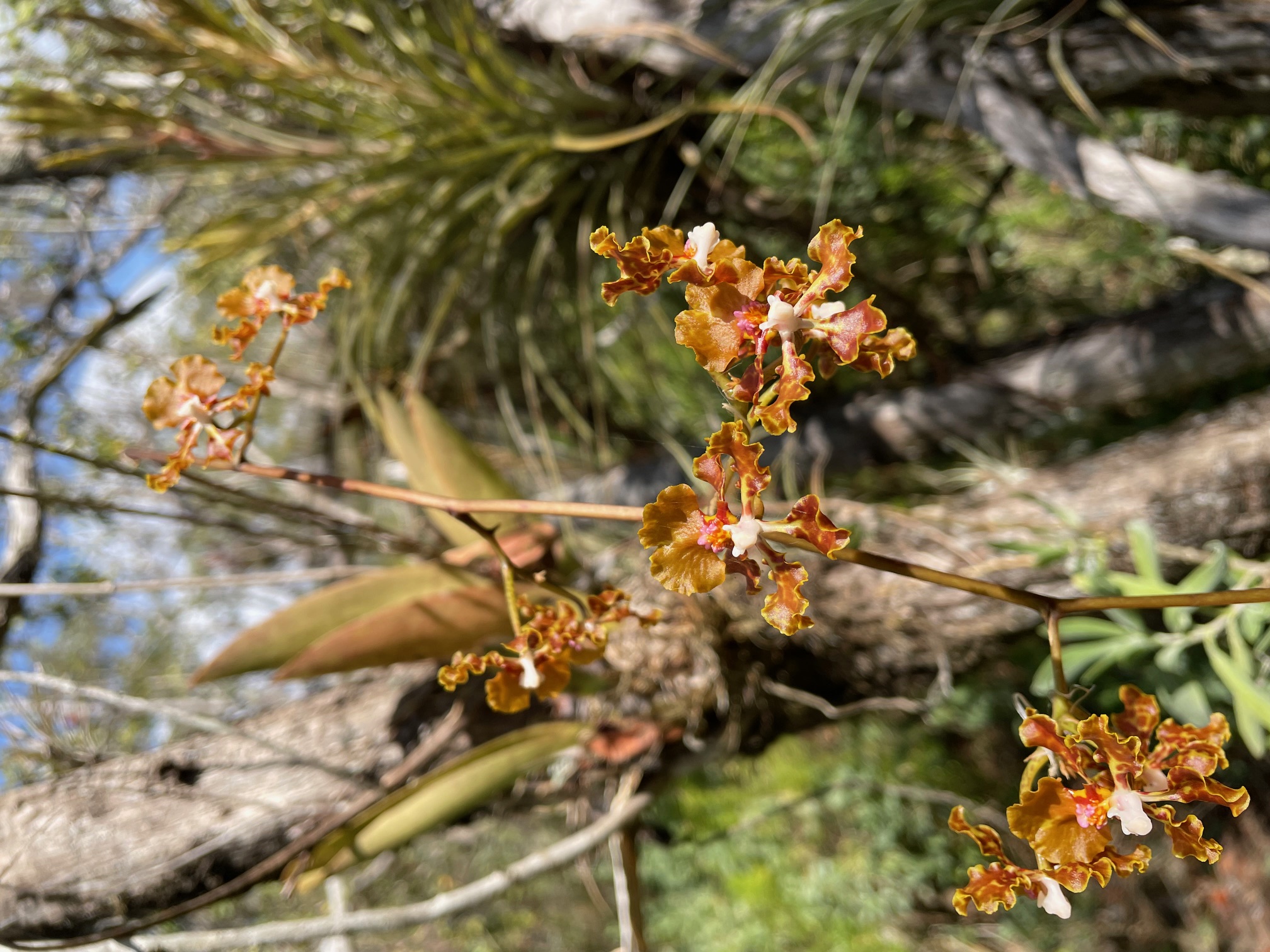
Trichocentrum undulatum. Foto: Hong Liu

Notas para añadir a la tabla

  • IPM - Integrated Population Model
  • Transient dynamics
  • Transfer function

Especies de orquídeas estudiadas sin MPP

En la siguiente lista incluimos algunos de los trabajos de dinámica poblacional que no usan MPP para responder a su pregunta. La lista es muy grande y no es exhaustiva. Incluye trabajos que usan otros métodos de estimación de parámetros, como modelos de regresión, o que usan IPM (Integral Population Models), pero no usan matrices de transición de estados o edades, que es el método alterno de estimación de parámetros que se usa en este libro.

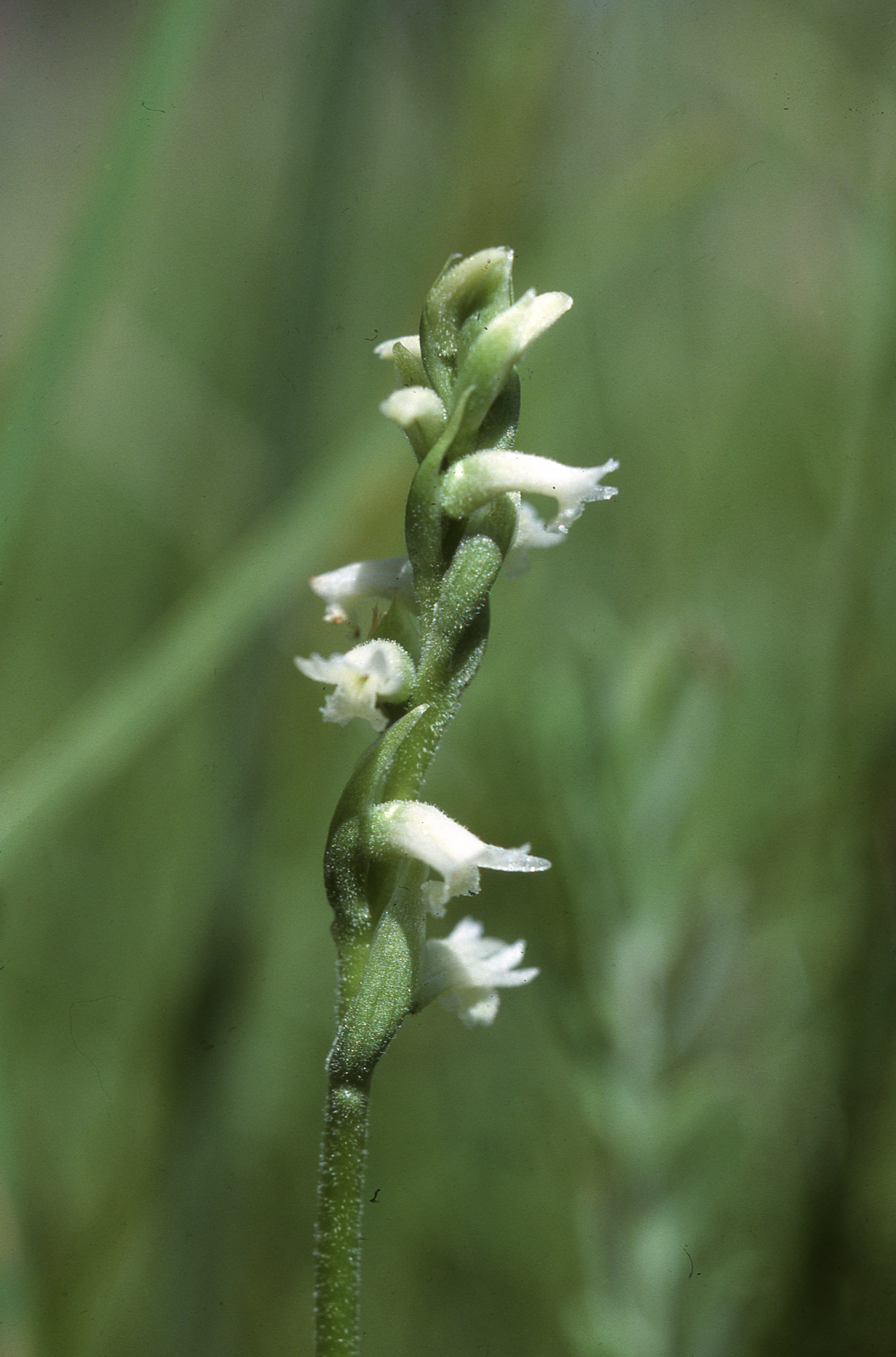
Spiranthes delitescens. Foto: Mitchel McClaran


Género Especies Otro Referencia
Isotria medeoloides no matrix Alahuhta et al. (2017)
Cyclopogon luteoalbus no matrix Juárez, Montaña & Franco (2014)
Cypripedium calceolus no matrix Davison et al. (2013)
Cypripedium candidum no matrix Shefferson, Mizuta & Hutchings (2017)
Gymnadenia conopsea no matrix Øien & Moen (2002)
Ophrys sphegodes no matrix Hutchings (2010)
Ophrys sphegodes no matrix Shefferson, Mizuta & Hutchings (2017)
Orchis morio no matrix Wells et al. (1998)
Spiranthes spiralis no matrix Jacquemyn et al. (2007)
Ackerman J, Tremblay R, Pérez M, Madden H, Bechtold M, Boeken M. 2020. Small populations on small islands: What chance does an orchid have? International Journal of Plant Sciences 181:667-685.
Alahuhta K, Crone E, Ettinger A, Hens H, Jäkäläniemi A, Tuomi J. 2017. Instant death, slow death and the consequences of assumptions about prolonged dormancy for plant population dynamics. Journal of Ecology 105:471-483.
Berry EJ, Cleavitt NL. 2021. Population dynamics and comparative demographics in sympatric populations of the round-leaved orchids Platanthera macrophylla and P. orbiculata. Population Ecology 63:274-289.
Borrero H, Oviedo-Prieto R, Alvarez JC, Ticktin T, Cisneros M, Liu H. 2023. Populations of a tropical epiphytic orchid are destabilized in its peripheral range by hurricane and an exotic herbivore. Ecosphere 14:e4355.
Calvo RN. 1993. Evolutionary demography of orchids: intensity and frequency of pollination and the cost of fruiting. Ecology 74:1033-1042. DOI: 10.2307/1940473.
Carey P. 1998. Modelling the spread of Himantoglossum hircinum (L.) Spreng. at a site in the south of England. Botanical Journal of the Linnean Society 126:159-172.
Chapagain DJ, Meilby H, Baniya CB, Budha-Magar S, Ghimire SK. 2021. Illegal harvesting and livestock grazing threaten the endangered orchid Dactylorhiza hatagirea (D. Don) Soó in Nepalese Himalaya. Ecology and evolution 11:6672-6687.
Cleavitt NL, Berry EJ, Hautaniemi J, Fahey TJ. 2017. Life stages, demographic rates, and leaf damage for the round-leaved orchids, Platanthera orbiculata (Pursh.) Lindley and P. macrophylla (Goldie) PM Brown in a northern hardwood forest in New Hampshire, USA. Botany 95:61-71.
Coates F, Duncan M. 2009. Demographic variation between populations of Caladenia orientalis–a fire-managed threatened orchid. Australian Journal of Botany 57:326-339.
Coates F, Lunt ID, Tremblay R. 2006. Effects of disturbance on population dynamics of the threatened orchid Prasophyllum correctum DL Jones and implications for grassland management in south-eastern Australia. Biological Conservation 129:59-69.
Cochran ME, Ellner S. 1992. Simple Methods for Calculating Age-Based Life History Parameters for Stage-Structured Populations: Ecological Archives M062-002. Ecological monographs 62:345-364.
Crain B, Tremblay R, Ferguson J. 2019. Sheltered from the storm? Population viability analysis of a rare endemic under periodic catastrophe regimes. Population Ecology 61:74-92. DOI: 10.1002/1438-390X.1002.
Davison R, Nicole F, Jacquemyn H, Tuljapurkar S. 2013. Contributions of covariance: decomposing the components of stochastic population growth in Cypripedium calceolus. The American Naturalist 181:410-420.
Dibble AC, Gawler SC, Wright WA, Vitt P, Cameron DS, Bajcz AW, Campbell CS. 2019. Demography of the rare orchid, Isotria medeoloides (Orchidaceae) and its response to a canopy thinning treatment. Rhodora 121:67-107.
Emeterio-Lara A, Garcı́a-Franco JG, Hernández-Apolinar M, Toledo-Hernández VH, Valencia-Dı́az S, Flores-Palacios A. 2021. Does extraction of orchids affect their population structure? Evidence from populations of Laelia autumnalis (Orchidaceae). Forest Ecology and Management 480:118667.
Falcón W, Ackerman JD, Tremblay R. 2017. Quantifying how acquired interactions with native and invasive insects influence population growth rates of a non-indigenous plant. Biological Invasions 19:895-911. DOI: 10.1007/s10530-016-1318-8.
Farfán Camargo J. 2008. Estrategias reproductivas de la orquídea Epidendrum xanthinum Lindl., en la Cordillera Occidental, Valle del Cauca. mathesis Thesis. Bogotá, Colombia: Universidad Nacional de Colombia.
Garcı́a MB, Goni D, Guzmán D. 2010. Living at the edge: Local versus positional factors in the long-term population dynamics of an endangered orchid. Conservation biology 24:1219-1229.
González-Hernández E. 2009. Dinámica de las poblaciones estructuradas en clases de vida de dos especies de la familia Orchidaceae: Broughtonia cubensis (Lindley) Cogniaux y Dendrophylax lindenii (Lindley) Bentham et Rolfe, en el Cabo San Antonio, Península de Guanahacabibes, Cuba. Modelos matriciales de proyección lineal. Tesis doctoral Thesis. Centro de Investigaciones y Servicios Ambientales ECOVIDA Pinar del Río, Cuba: Universidad de ALicante, Spain.
Gregg KB. 1991. Variation in Behaviour of four populations of the orchid Cleistes divaricata, an assessment using transition matriz models. In: Wells TCE, Willems JH eds. Population Ecology of Terrestrial Orchids. SPB Academic Publishing bv, The Hague, 139-159.
Gregg KB, Kéry M. 2006. Comparison of size vs. life-state classification in demographic models for the terrestrial orchid Cleistes bifaria. Biological Conservation 129:50-58.
Hens H, Pakanen V-M, Jäkäläniemi A, Tuomi J, Kvist L. 2017. Low population viability in small endangered orchid populations: Genetic variation, seedling recruitment and stochasticity. Biological Conservation 210:174-183.
Hernández-Apolinar M. 1992. Dinámica poblacional de Laelia speciosa (HBK) Schltr. (Orchidaceae). mathesis Thesis. Mexico City, Mexico.
Hutchings M. 2010. The population biology of the early spider orchid Ophrys sphegodes Mill. III. Demography over three decades. Journal of Ecology 98:867-878.
Iriondo Alegria J, Albert Gamboa M, Gimenez Benavides L, Dominguez Lozano F, Escudero Alcantara A. 2009. Poblaciones en Peligro: Viabilidad Demográfica de la flora vascular amenazada de Espana. Direccion General de Medio Ambiente y Politica Forestal.
Jacquemyn H, Brys R, Hermy M, Willems JH. 2007. Long-term dynamics and population viability in one of the last populations of the endangered Spiranthes spiralis (Orchidaceae) in the Netherlands. Biological Conservation 134:14-21.
Jacquemyn H, Brys R, Jongejans E. 2010. Seed limitation restricts population growth in shaded populations of a perennial woodland orchid. Ecology 91:119-129.
Jäkäläniemi A, Crone EE, Närhi P, Tuomi J. 2011. Orchids do not pay costs at emergence for prolonged dormancy. Ecology 92:1538-1543.
Juárez L, Montaña C, Franco M. 2014. The viability of two populations of the terrestrial orchid Cyclopogon luteoalbus in a fragmented tropical mountain cloud forest: Dormancy delays extinction. Biological conservation 170:162-168.
Kéry M, Gregg KB. 2004. Demographic analysis of dormancy and survival in the terrestrial orchid Cypripedium reginae. Journal of Ecology 92:686-695.
Maldonado Flores C. 2005. Patrón de crecimiento y reproducción de la orquı́dea Epidendrum xanthinum Lindl. en la Cordillera Occidental, Valle del Cauca. mathesis Thesis. Instituto Politecnico Nacional, Santa Cruz Xoxocotlán, Oaxaca.
McClaran MP, Sundt PC. 1992. Population dynamics of the rare orchid, Spiranthes delitescens. The Southwestern Naturalist 37:299-303.
Mondragón D. 2009. Population viability analysis for Guarianthe aurantiaca, an ornamental epiphytic orchid harvested in Southeast México. Plant species biology 24:35-41.
Mondragón D, Maldonado C, Aguilar-Santelises R. 2007. Life history and demography of a twig epiphyte: a case study of Erycina crista-galli (Orchidaceae). Selbyana:137-144.
Nicolè F, Brzosko E, Till-Bottraud I. 2005. Population viability analysis of Cypripedium calceolus in a protected area: longevity, stability and persistence. Journal of Ecology 93:716-726.
Øien D-I, Moen A. 2002. Flowering and survival of Dactylorhiza lapponica and Gymnadenia conopsea in the Sølendet Nature Reserve, Central Norway. In: Kindlmann P, JH W, Whigham D eds. Trends and Fluctuations and Underlying Mechanisms in Terrestrial Orchid Populations. Backhuys Publishers, Leiden, The Netherlands, 3-22.
Ospina-Calderón N, Tremblay R, Torres A, Flanagan N. 2023. The effect of habitat transformation on a twig epiphytic orchid: Evidence from population dynamics. Frontiers in Ecology and Evolution 11:1135316.
Pellegrino G, Bellusci F. 2014. Effects of human disturbance on reproductive success and population viability of Serapias cordigera (Orchidaceae). Botanical Journal of the Linnean Society 176:408-420.
Pfeifer M, Jetschke G. 2006. Influence of geographical isolation on genetic diversity of Himantoglossum hircinum (Orchidaceae). Folia Geobotanica 41:3-20.
Raventós J, Garcı́a-González A, Riverón-Giró FB, Damon A. 2018. Comparison of transient and asymptotic perturbation analyses of three epiphytic orchid species growing in coffee plantations in Mexico: effect on conservation decisions. Plant Ecology & Diversity 11:133-145.
Raventós J, González E, Mújica E, Doak DF. 2015. Population Viability Analysis of the Epiphytic Ghost Orchid (Dendrophylax lindenii) in Cuba. Biotropica 47:179-189.
Raventós J, Mújica E, Gonzalez E, Bonet A, Ortega-Larrocea MP. 2021. The effects of hurricanes on the stochastic population growth of the endemic epiphytic orchid Broughtonia cubensis living in Cuba. Population Ecology 63:302-312.
Reddoch JM, Reddoch AH. 2007. Population ecology of Platanthera hookeri (Orchidaceae) in southwestern Quebec, Canada. The Journal of the Torrey Botanical Society 134:369-378.
Riverón-Giró FB, Raventós J, Damon A, Garcı́a-González A, Mújica E. 2019. Spatio-temporal dynamics of the invasive orchid Oeceoclades maculata (Orchidaceae), in four different habitats in southeast Chiapas, Mexico. Biological Invasions 21:1905-1919.
Shefferson RP, Kull T, Tali K, Kellett KM. 2012. Linking vegetative dormancy to fitness in two long-lived herbaceous perennials. Ecosphere 3:1-19. DOI: 10.1890/ES11-00328.1.
Shefferson RP, Mizuta R, Hutchings MJ. 2017. Predicting evolution in response to climate change: the example of sprouting probability in three dormancy-prone orchid species. Royal Society Open Science 4:160647.
Shefferson RP, Tali K. 2007. Dormancy is associated with decreased adult survival in the burnt orchid, Neotinea ustulata. Journal of Ecology 95:217-225.
Shefferson RP, Warren RJ, Pulliam HR. 2014. Life-history costs make perfect sprouting maladaptive in two herbaceous perennials. Journal of Ecology 102:1318-1328.
Sieg CH, King RM. 1995. Influence of environmental factors and preliminary demographic analyses of a threatened orchid, Platanthera praeclara. American Midland Naturalist:307-323.
Simmons C. 2016. Conservation genetics and population viability of the endangered swamp orchid Phaius australis (Orchidaceae) in a changing world. Tesis doctoral Thesis. Faculty of Science, Health, Education; Engineering, University of the Sunshine Coast, Queensland, Australia: University of the Sunshine Coast.
Sletvold N, Dahlgren JP, Øien D-I, Moen A, Ehrlén J. 2013. Climate warming alters effects of management on population viability of threatened species: results from a 30-year experimental study on a rare orchid. Global Change Biology 19:2729-2738.
Sletvold N, Øien D-I, Moen A. 2010. Long-term influence of mowing on population dynamics in the rare orchid Dactylorhiza lapponica: the importance of recruitment and seed production. Biological Conservation 143:747-755.
Štípková Z. 2013. Vliv kosení na populační dynamiku silně ohroženého druhu Pseudorchis albida (Orchidaceae).; Effect of mowing on population dynamics of a highly endangered species Pseudorchis albida (Orchidaceae). mathesis Thesis. Faculty of Science, University of South Bohemia, Czech Republic.
Tali K. 2002. Dynamics or Orchis ustulata populations in Estonia. In: Kindlmann P, JH W, Whigham D eds. Trends and Fluctuations and Underlying Mechanisms in Terrestrial Orchid Populations. Backhuys Publishers, Leiden, The Netherlands, 33-42.
Thorpe A, Stanley A, Kaye T, P L. 2011. Population trends, demography, and the effects of environment and disturbance on Cypripedium fasciculatum in southern Oregon. Institute for Applied Ecology, Corvallis, Oregon; USDI Bureau of Land Management, Medford District, Medford, Oregon.
Timsina B, Kindlmann P, Münzbergová Z, Rokaya MB. 2021. Six-year demographic study of the terrestrial orchid, Crepidium acuminatum: implications for conservation. Frontiers in Ecology and Evolution 9:676993.
Tremblay R. 1997. Lepanthes caritensis, an endangered orchid: no sex, no future? Selbyana:160-166.
Tremblay R, Ackerman J. 2001. Gene flow and effective population size in Lepanthes (Orchidaceae): a case for genetic drift. Biological Journal of the Linnean Society 72:47-62. DOI: 10.1006/bijl.2000.0485.
Tremblay RL, Hutchings MJ. 2003. Population dynamics in orchid conservation: a review of analytical methods based on the rare species Lepanthes eltoroensis. In: Orchid Conservation. Kota Kinabalu: Natural History Publications (Borneo), 183-204.
Tremblay, Pérez M, Larcombe M, Brown A, Quarmby J, Bickerton D, French G, Bould A. 2009b. Dormancy in Caladenia: A Bayesian approach to evaluating latency. Australian Journal of Botany 57:340-350.
Tremblay, Pérez M, Larcombe M, Brown A, Quarmby J, Bickerton D, French G, Bould A. 2009a. Population dynamics of Caladenia: Bayesian estimates of transition and extinction probabilities. Australian Journal of Botany 57:351-360.
Tremblay R, Raventos J, Ackerman J. 2015. When stable-stage equilibrium is unlikely: integrating transient population dynamics improves asymptotic methods. Annals of Botany 116:381-390. DOI: 10.1093/aob/mcv031.
Tremblay R, Tyre AJ, Pérez M-E, Ackerman JD. 2021. Population projections from holey matrices: Using prior information to estimate rare transition events. Ecological Modelling 447:109526.
Wells T, Rothery P, Cox R, Bamford S. 1998. Flowering dynamics of Orchis morio L. and Herminium monorchis (L.) R. Br. at two sites in eastern England. Botanical Journal of the Linnean Society 126:39-48.
Winkler M, Hülber K, Hietz P. 2009. Population dynamics of epiphytic orchids in a metapopulation context. Annals of Botany 104:995-1004. DOI: 10.1093/aob/mcp188.
Wonka C. 2010. Large herbivores impact on demographic characteristics and population dynamics of an endangered orchid Spiranthes parksii Correll. mathesis Thesis. Texas A & M University.
Zhongjian L, Lijun C, Wenhui R, Liqiang L, Yuting Z. 2008. Correlation between numerical dynamics and reproductive behavior in Cypripedium lentiginosum. Acta Ecologica Sinica 28:111-121.
Zotz G, Schmidt G. 2006. Population decline in the epiphytic orchid Aspasia principissa. Biological Conservation 129:82-90. DOI: 10.1016/j.biocon.2005.07.022.